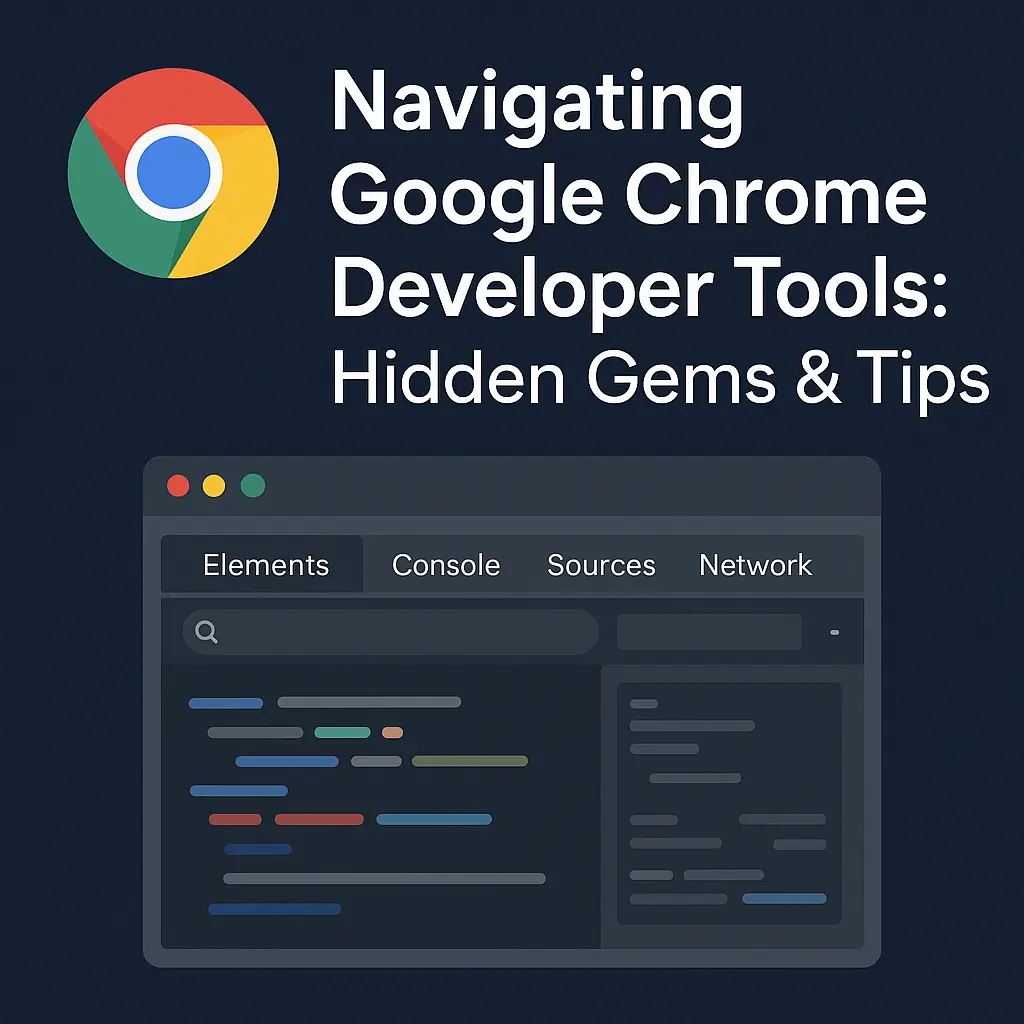
Navigating Google Chrome Developer Tools. When it comes to modern web development and testing, Google Chrome is more than just a fast and reliable browser—it’s a powerful development environment. Thanks to Chrome’s built-in Developer Tools (DevTools), developers, testers, and IT professionals can inspect, debug, and optimize websites with precision. Google Chrome Developer Tools While many users stick to the basics—like checking HTML and CSS—there are hidden gems inside DevTools that can save time and improve workflow significantly.
In this blog, we’ll explore some of the most useful but lesser-known features in Google Chrome Developer Tools that every professional should know.
Why Use Google Chrome Developer Tools?
Google Chrome holds the largest share in the browser market, making it the default testing ground for most developers. Its DevTools are designed to: Google Chrome Developer Tools
- Debug JavaScript in real time
- Inspect and edit page structure (HTML & CSS)
- Monitor network requests and performance
- Emulate devices for responsive testing
- Optimize web applications for speed and accessibility
But beyond these basics, Chrome DevTools has advanced features that many users overlook.
Hidden Gems Inside Google Chrome DevTools
1. Device Mode for Mobile Emulation
Instead of testing on multiple devices, Chrome lets you emulate smartphones, tablets, and even throttled networks. You can: Google Chrome Developer Tools
- Switch between different screen sizes
- Simulate touch gestures
- Test loading speeds on 3G, 4G, or slow Wi-Fi connections
This is a game-changer for responsive design testing.
2. Performance Audit with Lighthouse
Chrome DevTools comes with Lighthouse, a built-in tool that generates detailed audits for performance, SEO, accessibility, and best practices. With one click, you get a report that pinpoints: Google Chrome Developer Tools
- Page speed bottlenecks
- Accessibility issues
- Opportunities for SEO improvement
It’s like having an automated website consultant inside Google Chrome.
3. Live Expressions in Console
The Console tab isn’t just for logging errors. With Live Expressions, you can monitor variables or DOM elements in real time. For instance, if you want to keep track of a changing value during an animation or script execution, Live Expressions provide instant insights without re-typing commands.
4. CSS and Layout Debugging Tools
Did you know Chrome lets you visualize CSS Grid and Flexbox layouts? By enabling these overlays in the Elements panel, you can:
- Highlight grid lines and gaps
- Debug misaligned Flexbox items
- Quickly fix layout issues without guesswork
This is especially helpful for modern responsive layouts. Google Chrome Developer Tools
5. Network Throttling and Offline Mode
Testing your website on a super-fast broadband connection isn’t enough. With Chrome’s Network tab, you can throttle bandwidth to see how your site behaves on slower connections—or even simulate offline conditions. This helps in building robust Progressive Web Apps (PWAs).
6. Changes Panel for CSS & JS Tweaks
Tired of losing edits made inside DevTools? The Changes panel records every CSS and JS tweak you make during inspection, so you can copy them back to your code editor without missing a step.
7. Coverage Tab for Unused Code
The Coverage tab shows how much of your CSS and JavaScript files are actually being used. This helps you:
- Identify unused styles and scripts
- Reduce page weight
- Improve performance for faster loading
8. Command Menu (Ctrl + Shift + P / Cmd + Shift + P)
If you’re lost inside DevTools, just press Ctrl + Shift + P. The Command Menu works like a search bar for all DevTools features. From disabling JavaScript to capturing screenshots, you can access everything in seconds.
Pro Tips for Developers Using Google Chrome
- Use Persistent Logs in the Network tab to track requests during navigation.
- Try the Animations tab to debug CSS animations frame by frame.
- Leverage Local Overrides to save code changes locally and test persistently.
- Enable Dark Mode in DevTools for less strain during long debugging sessions.
Final Thoughts
Also read – Hidden Google Workspace Tips and Tricks for Professionals
Google Chrome is more than a browsing tool—it’s a complete development powerhouse. By exploring hidden features inside Chrome DevTools, developers can debug faster, design smarter, and build more efficient websites. Whether you’re a front-end designer, full-stack developer, or QA engineer, mastering these tools will give you a competitive edge. Amyntas Media Works
If your business relies on delivering seamless digital experiences, knowing how to unlock the full potential of Google Chrome is no longer optional—it’s essential
Lets Choose between AI or Google Gemini. Speaking of AI Read more

Unlock the power of Google Vertex, a fully managed, end-to-end Read more

Facebook Creator Studio Full Guide has emerged as a powerful tool Read more

Studio Ghibli’s iconic art style is beloved for its dreamy Read more